
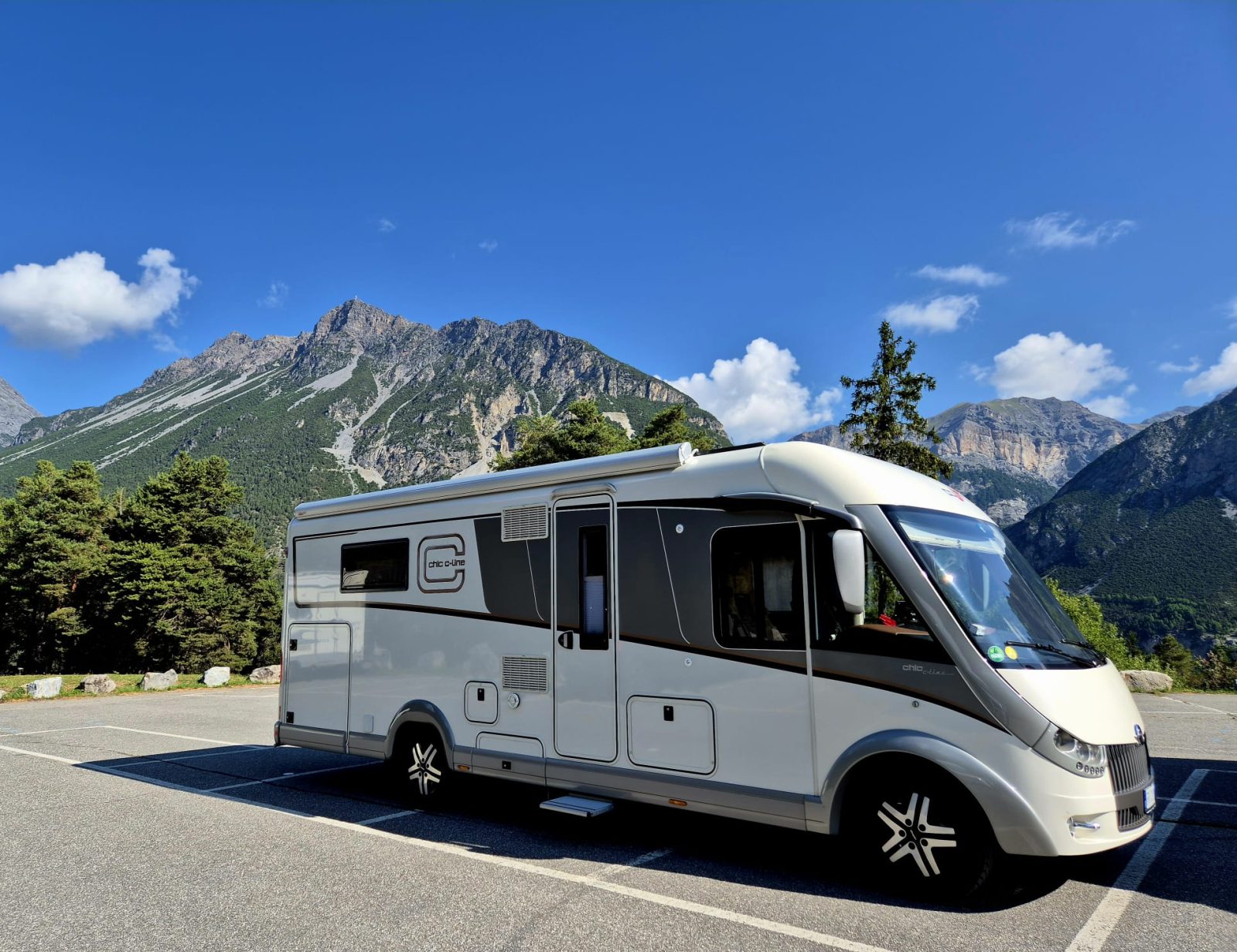
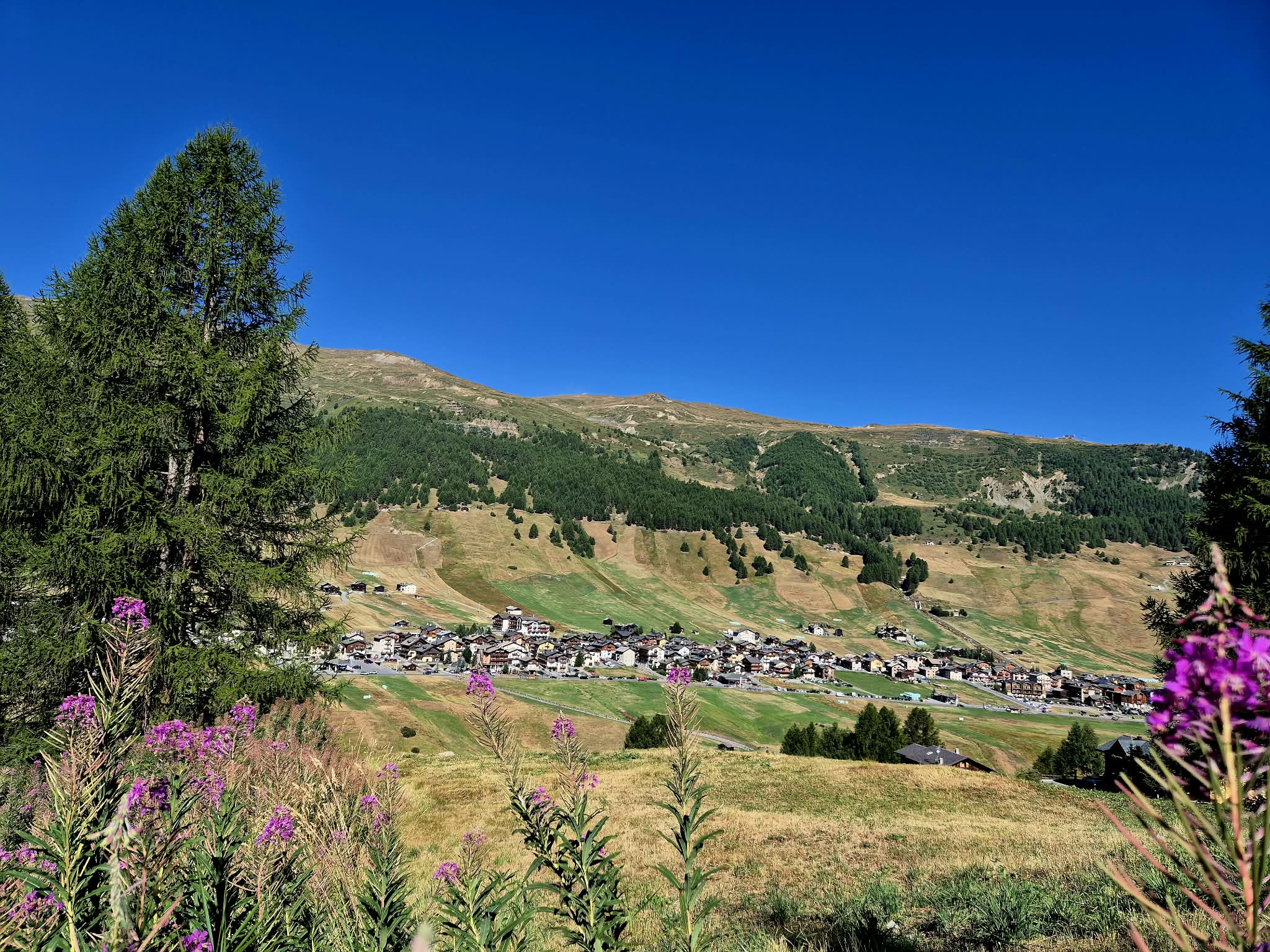
After many years spent in Livigno in winter, with its snow-covered slopes and the scent of mulled wine warming our hands, we wanted to discover Livigno in summer, with its green meadows and the fresh air scented with larch and gentian. And here we are: the Carthago is ready to go, the scooter and the dog are on board, and we’re keen to see whether ‘Little Tibet’ will still captivate us, even without snow.
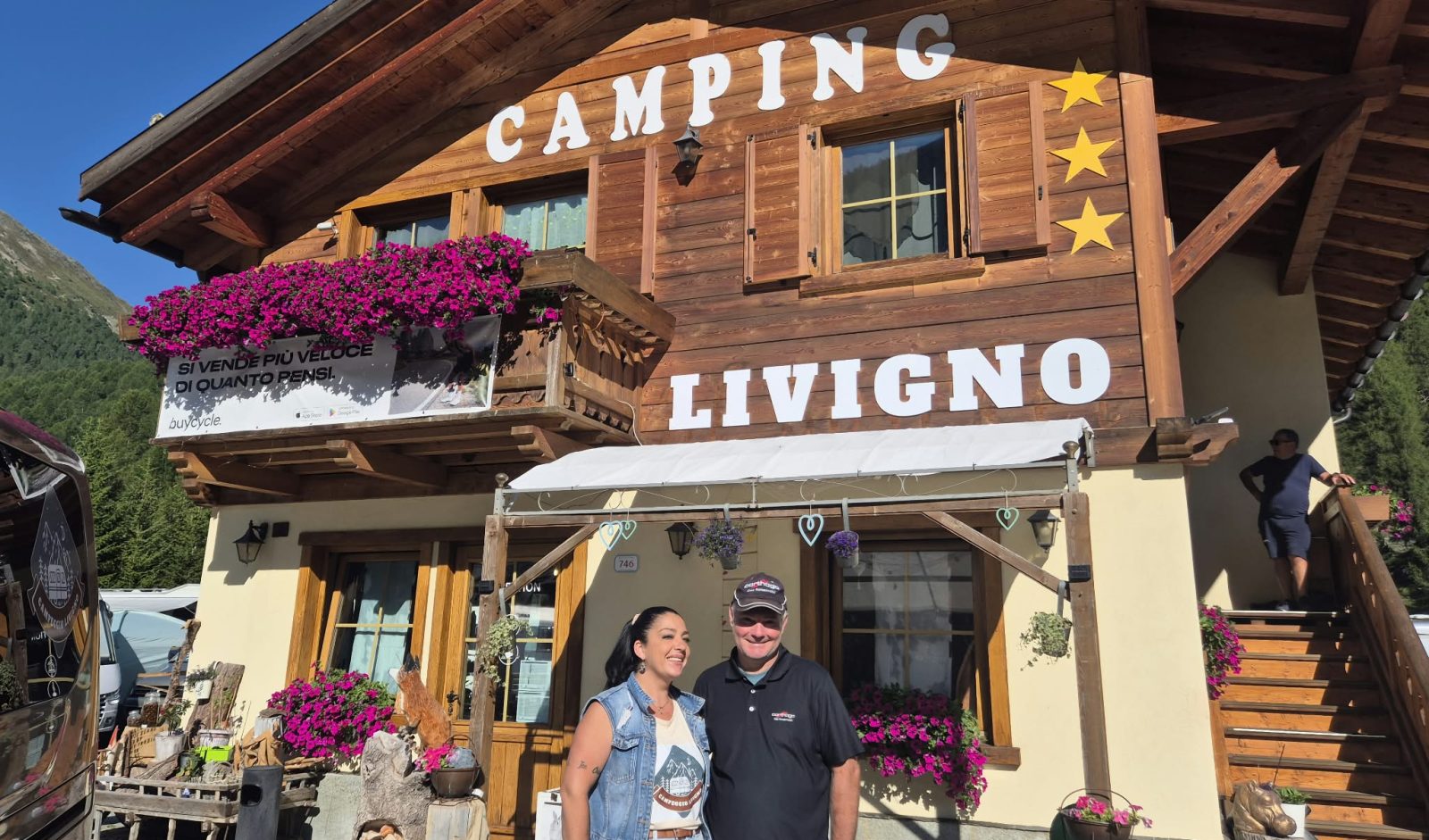
CAMPING LIVIGNO.
Rambo, our Chihuahua, is the first to run down: he’s never experienced Livigno in winter before, as it was too cold for his little paws, but now he’s having fun running through the grass. We take the scooter out of the storage space. In winter, it’s skis and ski boots; in summer, all you need are two helmets and a desire to explore. The campsite may be small, but it’s very charming – not least thanks to Mara, who runs it and is bursting with energy. It has all the essential facilities, including a laundry room. Mara also organises entertaining events at the campsites every evening, which are very popular with guests.
THE VAL-NERA WATERFALL AND THE WOBBLY BRIDGE.
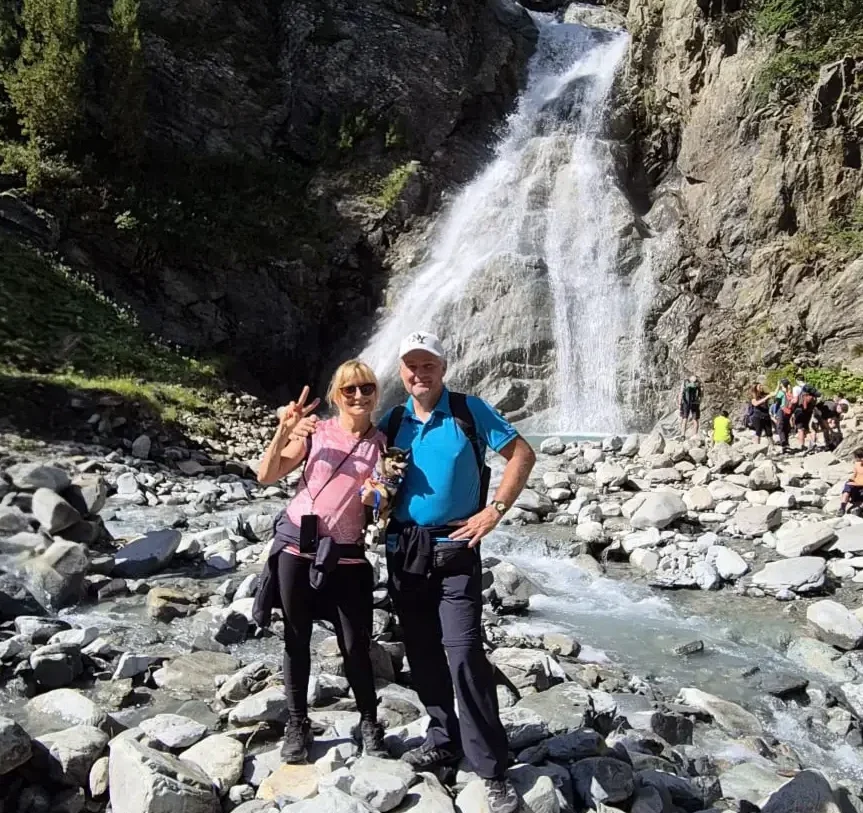
First stage: the ‘Cascata Val Nera’ waterfall. The footpath is near the campsite; the morning air is fresh and crisp. The path leads gently uphill, past alpine rhododendrons and small streams with crystal-clear water. Rambo is like a raging river; he trots proudly at the head of the group and is convinced he is a wolf from the Alps. The closer we get, the louder the muffled sound of the water becomes. Having completed the last section in the sunshine, it lies right before us: the Val Nera waterfall reveals itself in all its splendour. We head downhill and cross the small Tibetan suspension bridge over the stream. It’s made of ropes and wood; it’s sturdy, but wobbles slightly, giving you a bit of an adrenaline rush. I laugh it off, whilst Rambo … well, Rambo has decided that a real wolf doesn’t need moving bridges. He let himself be teased and enjoyed the ride, floating in the air with an air of superiority.
A jet of ice-cold water gushing out from between the dark rocks, creating a breeze that refreshes our faces. We stop on a large boulder in the sunshine for a snack.
FLIGHT TO SWITZERLAND.
In the evening, the temperatures drop and we retreat to the warmth of our Carthago and switch on the Alde heating system, setting it to the ‘high’ setting. Let’s pop outside for a moment before we go to bed. Without the light pollution from the ski season, the sky looks simply incredible. Black and full of stars. We’ve never seen it like this in winter before: too much snow, too many lights. We stand for 5 minutes, looking upwards and in silent contemplation. I won’t be setting the alarm for tomorrow morning: time passes slowly in the mountains.
We wake up at eight o’clock in broad daylight. The road is still damp after the overnight rain, but we put gas into the engine and set off for Switzerland. We take the road to Forcola di Livigno. This is the one where you realise straight away that it’s not just a simple stretch of road, but a mountain pass. Narrow, full of bends, with good but not perfect tarmac. We stop at the top: on one side lies the Livigno valley, and on the other, the Val Poschiavo.
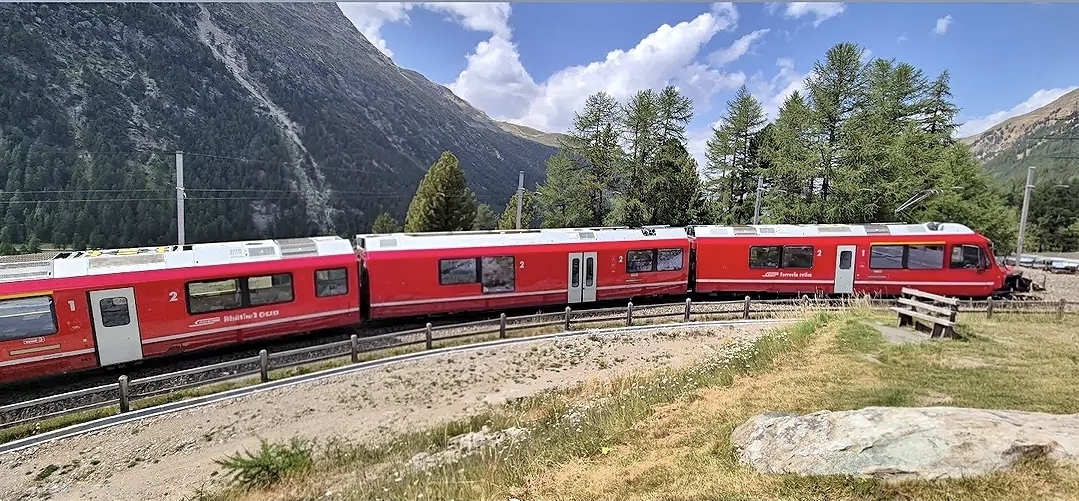
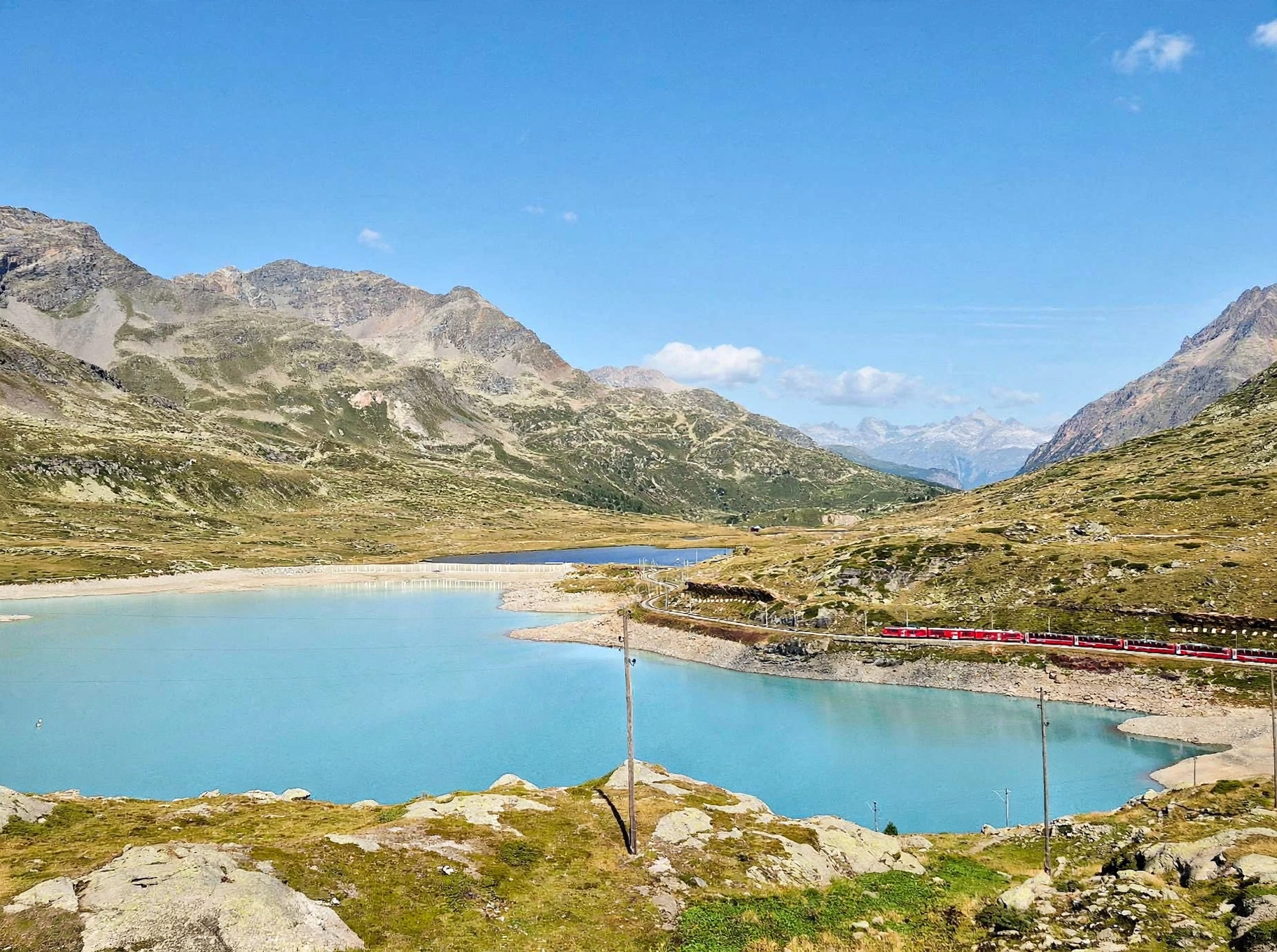
After a few winding bends down the hill, we reach Switzerland and join the road to the Bernina Pass. And this is where everything changes: perfect tarmac, laid with millimetre precision just like in Switzerland, and the red tracks of the ‘Trenino’ appearing alongside us… Every now and then you can hear it whistling round a bend, and before you know it, it’s right back beside you. At some point, bend after bend, Lago Bianco suddenly comes into view; it owes its name to the sediments originating from the glacier. It isn’t actually white; its colour depends on the sunlight. Right next to it, separated only by a very narrow dam, lies Lago Nero, which has a different colour as it is not fed by glacial water. Two lakes side by side, each with a completely different colour.
As you come down from the top, you can see Lake St Moritz, the huge hotels and the mountains below. We park the scooter by the lakeside. Everything here is priced in CHF; even the air seems to be more expensive. We’ll have a quick coffee and enjoy five minutes of luxury.
ON TWO WHEELS.
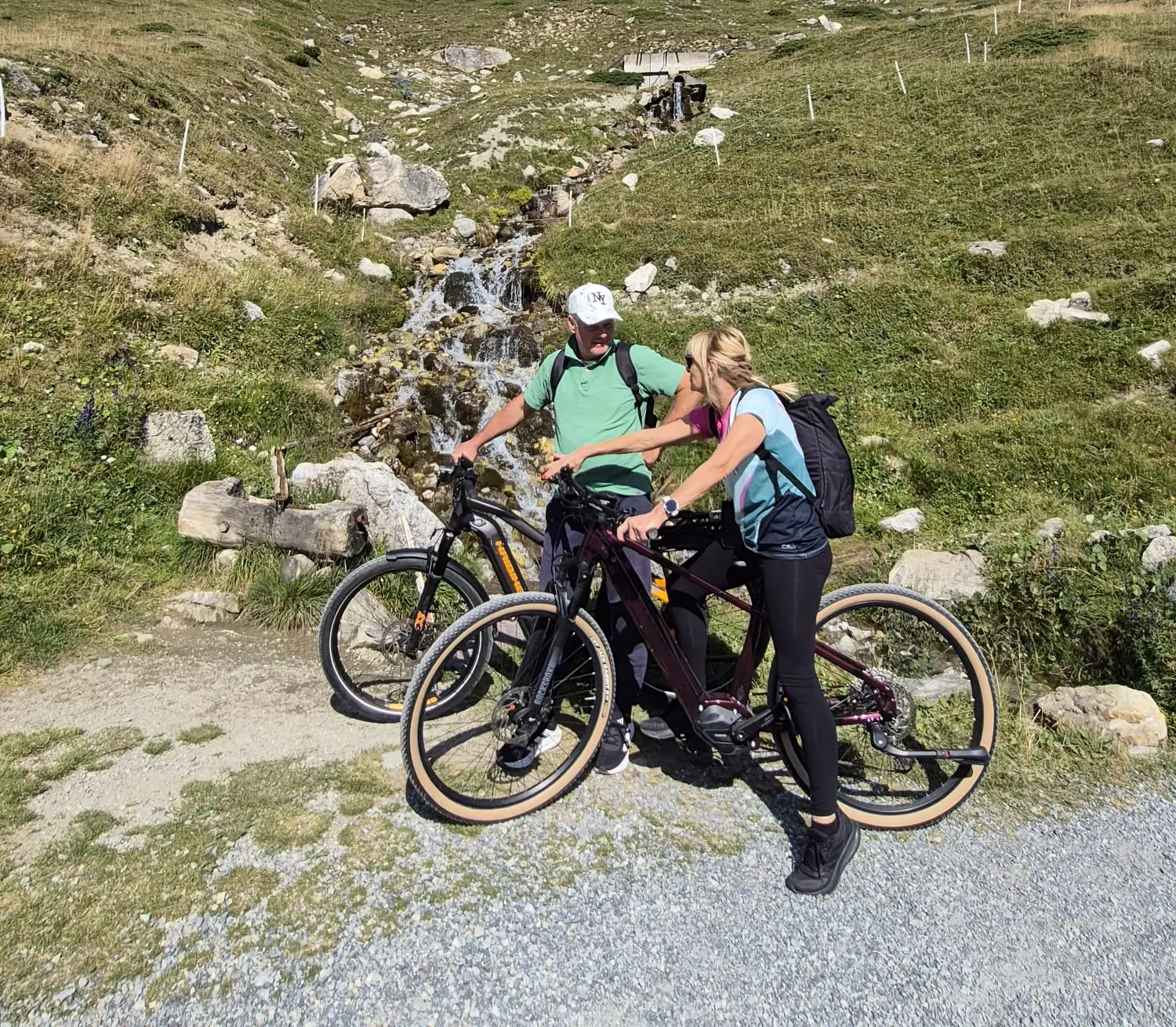
Right, let’s change transport. After parking the scooter, we hop on two e-bikes that we’ve hired in the city centre. We’re spending a wonderful day between Val Federia and Val Alpisella.
They say that Val Federia is the most beautiful and charming valley in Livigno, and indeed it does not disappoint. You leave the tarmac road and turn onto a wide, well-trodden dirt track that climbs gently. No traffic, just cows, streams and marmots. We arrive at the hut to take a short break, and as we sit on the lawn with our bikes beside us, we realise what is meant by ‘time standing still’. The cycle path takes us straight to the Alpisella Hut, as we cycle along the lake and through a larch forest. On the way back, we pass the lakeside, where the water recedes in summer to make way for meadows. It’s a strange and exhilarating feeling: riding an e-bike across the soft grass – in exactly the same spot where, just a few months ago, we were racing across the ice on a snowmobile.
RAMBO’S DAY.
After our fast-paced scooter rides and e-bike tours, we’re taking it a bit easier today and turning our attention to a lower elevation. Today is Rambo’s day: a slow stroll, nose to the ground, and off to the ‘Sentiero dell’Arte’. This is no ordinary forest. It is quiet in a different way – a gentle bend amongst towering tree trunks that smell of resin. And then, quite suddenly, there they were. The first sculpture stands out amongst the larch trees, as if it had always been there. There are 40 wooden sculptures. There is no museum, there is no admission ticket, there is no arrow to show you where to look. Take your time, and the works will find you of their own accord.
We thought we’d had enough of the day trips. But here’s the thing: the more you walk, the more you want to see. So we say to each other: “This is the last one, I promise,” and set off on our scooter towards the Crap de la Parè, the ultimate panoramic route. We leave the scooter at Passo d’Eira and take the path to the Stations of the Cross. The first climb will leave you a bit out of breath, then it levels out. We reach the large summit cross and … silence.
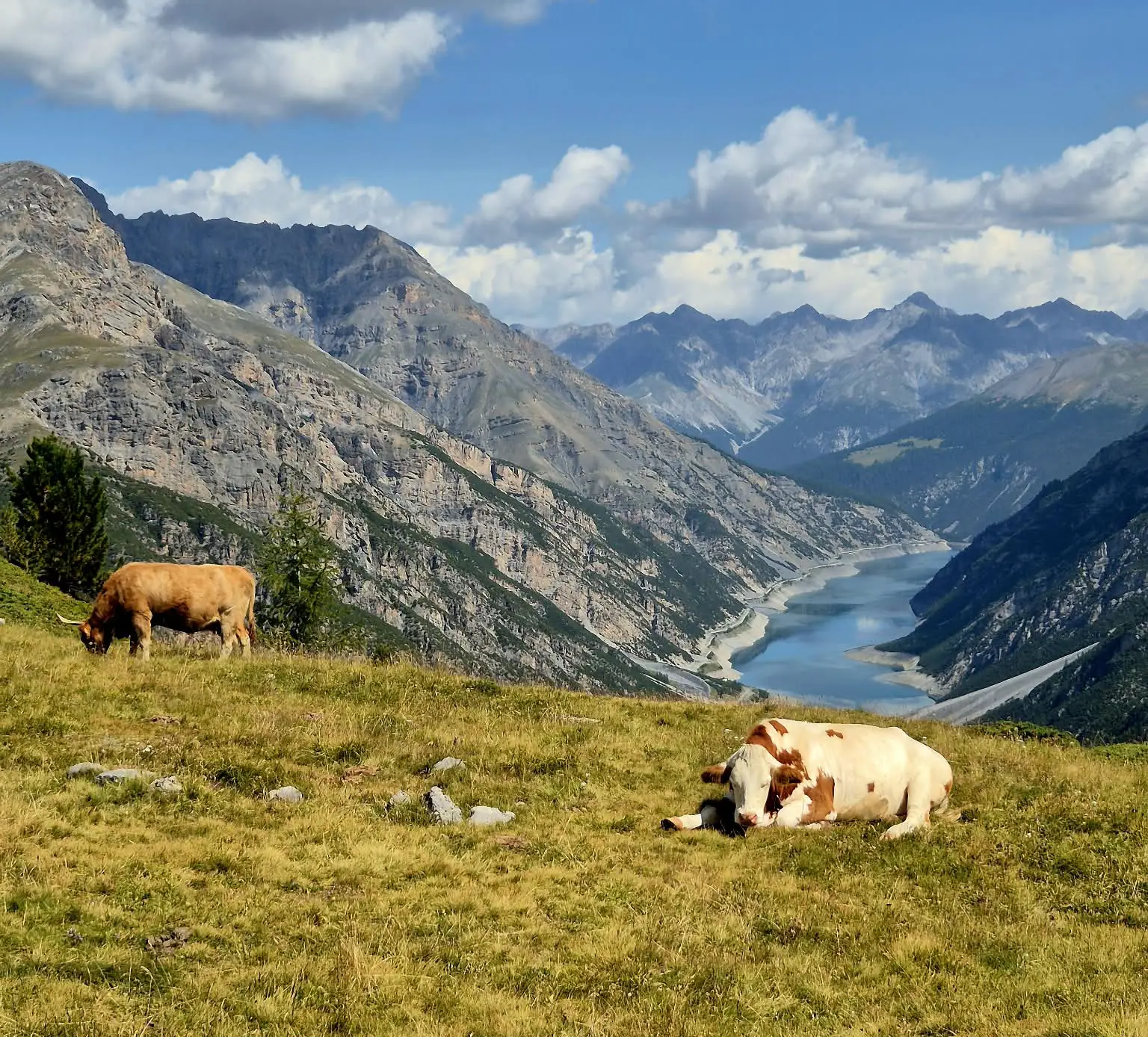
On one side stands the whole country. On the other side lies the lake, 600 metres lower down, long and blue, so much so that it almost seems unreal. Rambo looks over the edge of the path, but then changes his mind and goes back into the shade. Everything around us: the Bernina, the Federia, the Carosello. Let’s sit down. There’s no wind blowing; just the cows grazing. And we realise: yes, this last hike was just the ticket.
THE TWO SOULS OF LIVIGNO.
Whilst the hiking trails and Alpine passes were the focus of our days, the centre of Livigno provided the perfect setting for a change of scenery every late afternoon. The pedestrianised area – that seemingly endless row of wooden chalets, boutiques and duty-free shops – became our regular spot for a stroll. Shopping and an aperitif. Rambo was given his bowl of water and a few biscuits even before we’d been served our drinks.
Livigno in winter means adrenaline on the snow, queues at the ticket offices and hot chocolate. Livigno in summer is all about wide open spaces, a leisurely pace and a green landscape that you wouldn’t expect to find at an altitude of 1,816 metres. It’s waking up in the motorhome when the mountain peaks are still tinged with pink, the aimless ride on the scooter, and coming home with the tired but happy little dog, who is sleeping on the step with his paws dirty from the ground. We were afraid of spoiling a memory, but instead we created a new one. ‘Little Tibet’ has two sides to it, and both make you feel right at home.
Roby, Cla und Rambo